Self-Service Pet Washes: The 6-Month ROI Amenity Your Apartment Community Is Missing
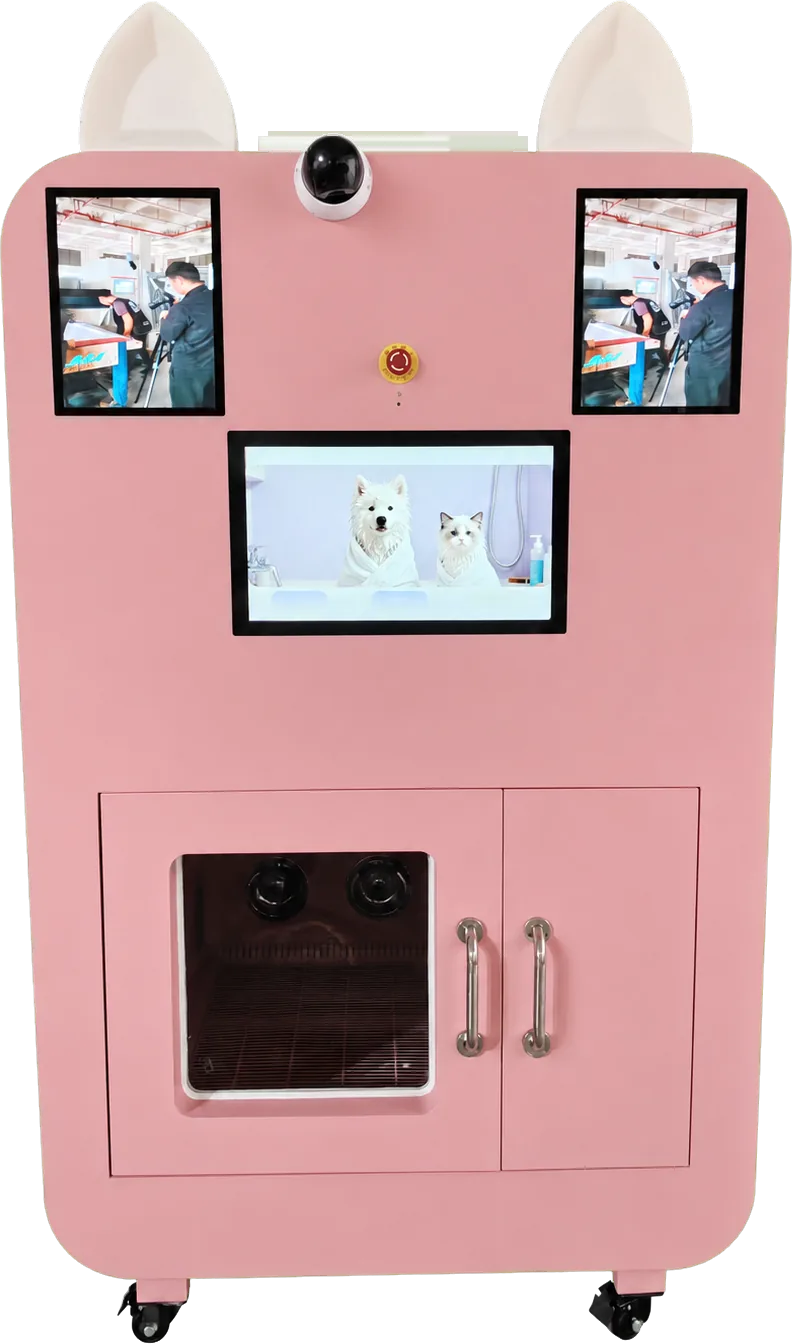
Apartment communities have spent years adding dog parks, waste stations, and pet-friendly policies. Those features help attract residents, but they do not always create measurable revenue or reduce daily workload.
A self-service pet wash can do both.
When properly placed and operated, a pet wash is more than a building feature. It can become revenue infrastructure: a small-footprint service that supports resident retention, protects unit plumbing, improves the value of pet rent, and creates a new income stream without adding another employee.
The important qualification is that the six-month ROI story is possible, not automatic. Results depend on pet density, pricing, placement, equipment cost, access, usage, and operating discipline.
Why pet amenities are now a multifamily NOI lever
Pet ownership is a major factor in apartment selection. Residents with dogs and cats are not only looking for permission to keep a pet. They are looking for a community that makes pet ownership easier.
A useful on-site wash can influence:
- Leasing decisions: A visible pet amenity can help a property stand out during tours and online searches.
- Renewals: Residents build habits around amenities they use regularly. A convenient wash station gives pet owners another practical reason to stay.
- Pet rent perception: A recurring amenity can make pet fees feel more connected to resident value.
- Maintenance costs: Washing muddy, shedding pets in apartment bathtubs can contribute to clogged drains, damaged fixtures, and maintenance requests.
- Ancillary revenue: A paid station or pet amenity package can create recurring income without requiring a staffed service desk.
Research and vendor data point to pet-friendly communities having stronger resident engagement and longer stays, but each property should validate that relationship against its own renewal and pet-ownership data. The strongest business case combines direct revenue with avoided turnover and maintenance costs.
The unit economics: what can a pet wash earn?
There are several ways to operate the station.
1. Pay-per-use
Residents pay for each wash through a card reader, QR code, resident portal, or mobile payment system. Published market examples commonly place a wash between $8 and $30, depending on the equipment, service level, and property positioning.
For planning purposes, many apartment communities should begin with a more conservative $10–$15 per use model.
At three to five washes per day, that produces approximately:
- $900–$2,250 in gross monthly revenue
- Before utilities, shampoo, payment processing, repairs, and service costs
Some high-traffic or premium locations may produce $3,000–$10,000 in potential gross monthly revenue. That range is not guaranteed profit. It depends on location, traffic, pricing, pet density, adoption, and operating costs.
2. Monthly pet amenity fee
A property may include the wash in a pet package or charge a monthly fee to participating residents. This can be easier to forecast than individual transactions, but adoption must be tested.
For example, a 300-unit property with 40% pet-owning households and a 50% participation rate would have approximately 60 participating households. At a $20 monthly pet amenity fee, that equals $1,200 in gross monthly revenue.
This model works best when the station is positioned as a resident benefit rather than a vending machine.
3. Free resident amenity
Some properties may choose not to charge residents directly. In that case, the return comes from:
- Higher renewal rates
- Stronger lease-up performance
- Better resident satisfaction
- Increased perceived value of pet rent
- Fewer pet-related maintenance issues
- Potentially lower turnover among pet-owning households
This is not a zero-value model. It simply measures the return differently.
Can a pet wash really reach ROI in six months?
It can, but the property has to meet the right conditions.
Industry estimates for equipment and installation vary widely. A practical planning range is approximately $10,000–$40,000 per bay, depending on whether the system is self-contained or plumbed, how far utilities must run, the amount of site work required, and the installation model.
Consider a simplified example:
- All-in project cost: $20,000
- Average price: $15 per wash
- Eight paid washes per day
- Gross monthly revenue: approximately $3,600
- Estimated variable operating cost: approximately $400–$800 per month
- Estimated monthly contribution before fixed overhead: approximately $2,800–$3,200
Under those assumptions, the equipment could approach a six- to eight-month payback.
However, a more moderate property with three to five washes per day may take 12–24 months to recover the initial investment. If the station is offered free to residents, direct revenue payback will take longer, but one or two avoided move-outs may materially improve the result.
The correct approach is to use six months as a feasibility target, not a promise.
Footprint and placement matter more than most owners expect
A pet wash does not need to occupy a large amenity room, but it does need to be convenient.
Good locations often include:
- Near an existing dog run
- At a garage or parking level
- Near a loading or service entrance
- Along a path residents already use
- In a utility room or amenity alcove
- Near building access control and lighting
A station that is technically available but difficult to reach will underperform.
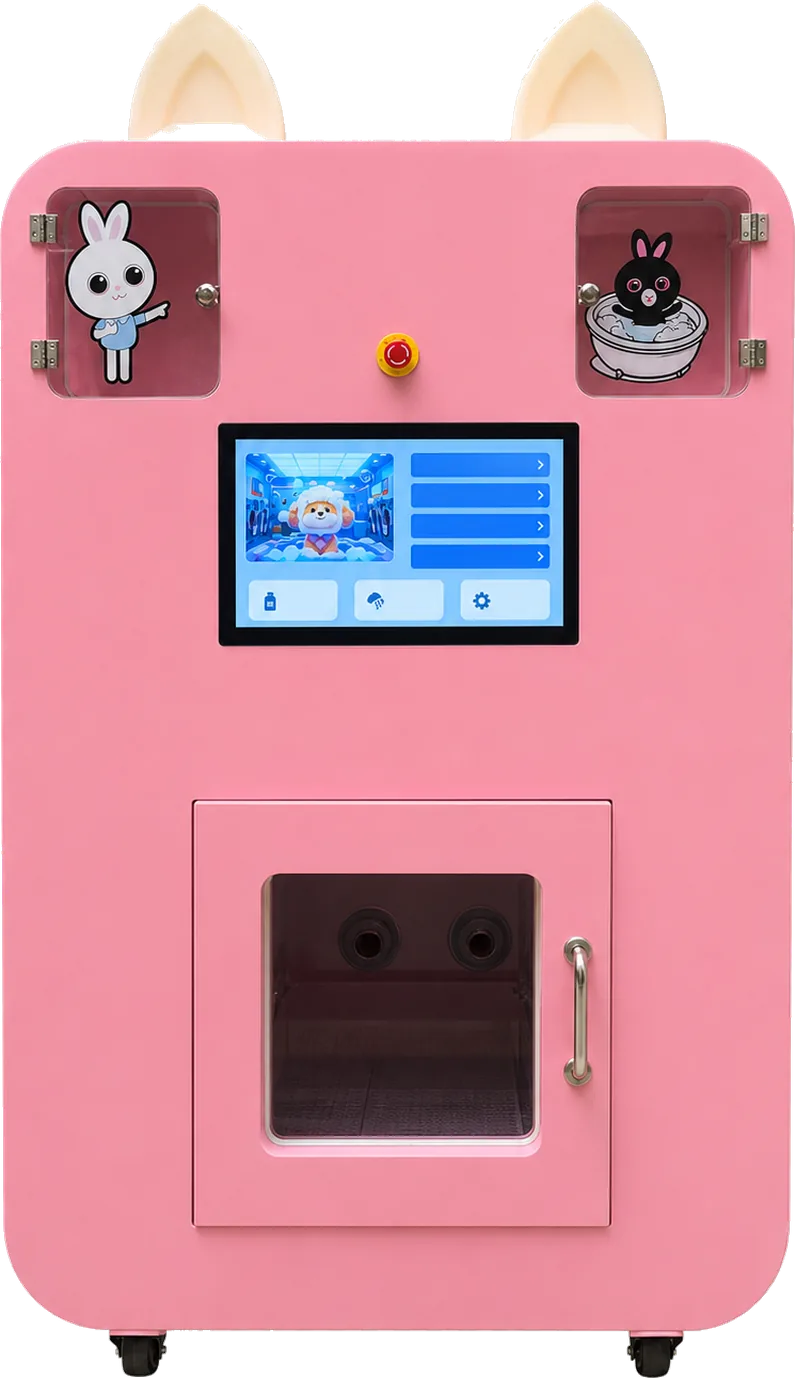
Before choosing the equipment, confirm:
- Available floor area and clearance
- Door and elevator dimensions
- Floor load capacity
- Nearby electrical service
- Water and drain access, if required
- Noise exposure to nearby apartments
- Lighting and camera coverage
- Protection from freezing temperatures for outdoor placements
- Whether residents can safely enter and exit with a wet pet
A compact station may fit in less than 100 square feet, but the surrounding area still needs room for residents, leashes, towels, cleaning supplies, and safe circulation.
Water, drainage, ventilation, and electrical requirements
The infrastructure depends on the type of unit.
Plumbed stations
A traditional or semi-automatic station may require:
- Hot and cold water
- A floor drain or sanitary drain connection
- Appropriate backflow protection
- Electrical power
- Waterproof or highly durable finishes
- Adequate ventilation
- Non-slip flooring
- Local code review and licensed installation
Drainage deserves special attention. Pet hair and debris can create problems when they enter building plumbing. A suitable hair collection system or interceptor may be necessary, depending on the equipment and local requirements.
Ventilation is also important in an enclosed room. It helps control humidity, odors, and drying heat. A station placed in a garage or outdoor area may have different requirements, but the design should still account for weather, winterization, and noise.
Self-contained stations
Some newer systems are designed to operate with an internal water tank and limited site infrastructure. These may only need a standard electrical outlet and suitable floor space.
That can significantly reduce construction work, but “no plumbing” does not mean “no planning.” The property still needs to confirm:
- Water tank refill procedures
- Wastewater handling
- Cleaning and disposal requirements
- Electrical load
- Ventilation for enclosed spaces
- Equipment weight
- Local safety and accessibility rules
Specifications should be reviewed by the property’s electrician, plumber, facilities professional, and insurance representative before purchase.
The labor question: self-service does not mean zero operations
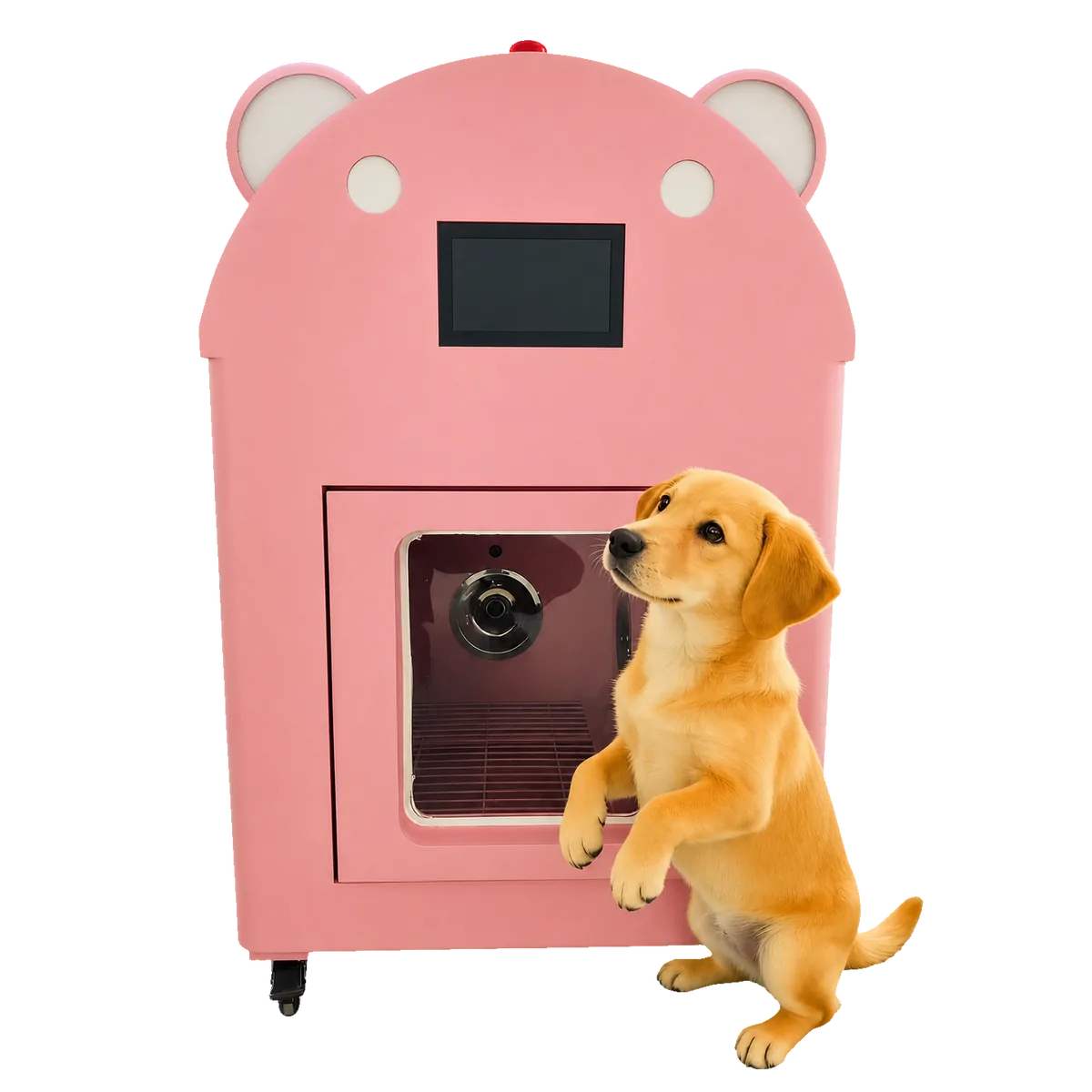
The goal is to eliminate dedicated staffing, not to pretend the station requires no attention.
A property team may still need to manage:
- Basic daily or weekly condition checks
- Shampoo and supply replenishment
- Hair and waste collection
- Surface cleaning around the station
- Payment or access issues
- Resident questions
- Equipment fault escalation
- Preventive maintenance
- Seasonal shutdown or freeze protection
The difference is that these tasks can be folded into existing property rounds rather than creating a new staffed position.
Remote status alerts, cashless payment, resident access controls, and clear operating instructions can reduce the burden further. The best system is the one that gives the property team visibility without turning the leasing office into a help desk.
Payment and access should fit your current systems
Residents should not need a complicated new process to use the amenity.
Depending on the equipment and property platform, access may include:
- Resident portal billing
- Key fob or mobile access
- PIN codes
- QR codes
- Credit and debit cards
- Apple Pay or Google Pay
- Guest pay-per-use access
A property may choose to restrict access to residents, include the wash in a pet package, or allow outside users to pay for individual sessions.
Before selecting a station, confirm whether it can work with your existing property management and access systems. Integrating the amenity into current workflows is one of the central goals of commercial property automation and modern property automation systems.
Build it yourself or use a deployment partner?
The equipment is only one part of the project.
A build-it-yourself approach may require the property team to coordinate:
- Site measurements
- Equipment procurement
- Freight delivery
- Elevator and loading access
- Plumbing
- Electrical work
- Drainage
- Ventilation
- Permits and inspections
- Licensed installers
- Payment setup
- Resident communication
- Warranty support
That coordination can consume more time than expected, especially for a regional property manager overseeing multiple communities.
A concierge partner can act as the single point of contact. At Smart Systems Automation, our role is to audit the space, design the operating plan, source the equipment, coordinate freight, and manage a vetted network of licensed regional installers. We do not perform the physical installation ourselves; we coordinate the qualified professionals responsible for the electrical, plumbing, and mechanical work.
That is the practical value of operations consulting and facility management consulting: removing the contractor-management burden while keeping the business case and deployment accountable.
Our localized deployment focus covers communities within approximately 90 miles of Belmont, New Hampshire, including properties across New Hampshire, southern Maine, Vermont, and Massachusetts. You can learn more about our services and multifamily automation solutions.
When a self-service pet wash does not make sense
A pet wash is not right for every property.
It may not make sense when:
- Pet ownership is low
- The community has fewer than enough residents to create repeat usage
- A nearby competitor offers a similar amenity at no cost
- There is no convenient location
- The property cannot support cleaning and supply checks
- Utility upgrades are unusually expensive
- Insurance or local code requirements create excessive friction
- The ownership group wants guaranteed profit instead of modeled potential
- The station would be hidden, difficult to access, or unsafe
The right first step is a property-level feasibility review. Look at the percentage of pet-owning households, renewal data, existing pet rent, maintenance tickets, competing amenities, available space, and likely usage.
A self-service pet wash can be a strong piece of commercial real estate technology when it is treated as revenue infrastructure, not as another amenity added to a brochure. For the right apartment community, it can support NOI, retention, and operational efficiency in a footprint smaller than many traditional amenity upgrades.